How a character becomes a person
In our last devlog we wrote that you don’t come back to Brewpire because a bar is full, but because you want to know how the people are doing. Today we’ll tell you how those people come to exist in the first place – and why it’s the hardest and, at the same time, most rewarding part of the work.
Every character starts with a shape
Annalena never draws anyone “finished” from the start. It begins with a silhouette. If you can recognize a character by their outline alone – before you see the face, the colour or the name – then it works. On top of that comes exactly one colour family and a single recognizable trait: for Nomi the oversized apron and the strand that always slips out of her tied-up hair. For Jonas the earbud that’s always half in. For Mrs. Hartmann the little hat and her dachshund Manni on the leash.
We set ourselves one firm rule here: you have to see at a glance who belongs to the shop and who’s a guest. The staff share a common element – the apron, the spot behind the counter, their own colour family. The guests you recognize by their individual silhouette. No searching, no guessing: he works here, she’s dropping by.
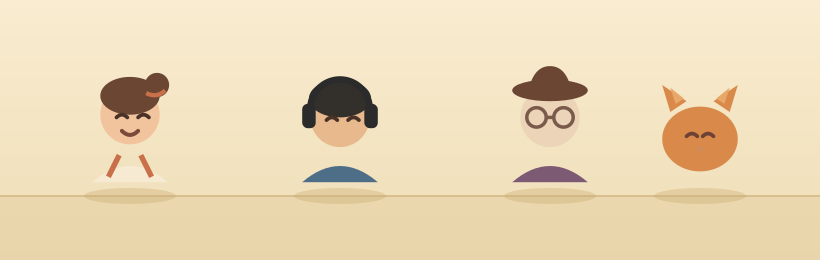
Then comes the soft spot
A shape alone isn’t a person yet. So every character gets a quirk, a soft spot and a reason why they, of all people, come to this particular café.
Nomi, for instance, keeps a battered little notebook next to the register with what every regular drinks – so she never has to ask. That this is exactly why people keep coming back is something she’d never believe. Her problem: she can’t handle conflict. If anyone complains, the coffee is simply on the house – charming, but a hole in the till. A small quirk like that later grows into a whole game mechanic for us: helping Nomi grow until she dares to say a friendly no.
Or Jonas, who sits at the window seat studying for a statistics exam that has already beaten him twice. You can tell his bad days from his posture, without it ever being spelled out on screen. At some point Nomi started making him the large cup “by accident” and charging for the small one. Not a word is ever said about it.
Nobody here is a “character type” with one trait slapped on. They should feel like people you know.
The game lives in the threads between them
The lovely part doesn’t happen inside the characters, but between them. Nomi goes quiet, Ricky talks for two – the pair balance each other out without anyone ever having said so. Quiet Elias and chatty little Ida become friends by drawing together instead of talking. And Mr. Özdemir sets up his chessboard every afternoon and plays against himself – a second chair, waiting for someone.
These stories move slowly. Often you only notice them when you drop by a few days later and think: “Wait, wasn’t there something going on there?”
And then there’s Mitsu
Mitsu is a cat and the actual owner of the shop; the whole inheritance-from-Grandma thing she considers a formality. She sleeps on the windowsill in the sun and tolerates the humans. She makes no money and triggers no quest – but she makes every single frame instantly cosy. Costs nothing. Priceless.
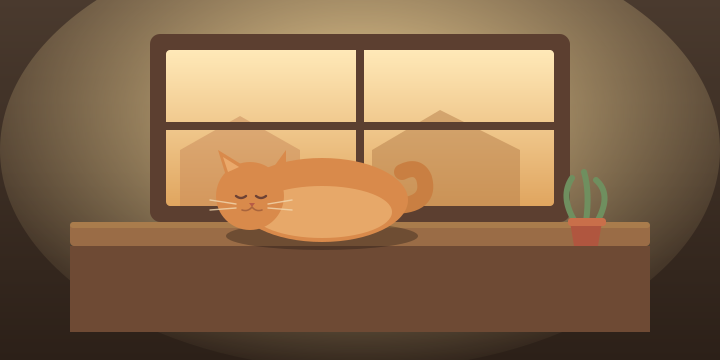
In the end, that’s exactly our “engagement system”: no countdown, no guilt-tripping reminder. Just a shop full of people whose stories you want to see continue. If you still open the app in three months because you want to know whether Jonas made it this time – then we did everything right.
— Jannik & Annalena